The Dysautonomia Triangle: Understanding the Overlap Between POTS, MCAS, and EDS
If you’ve been diagnosed with POTS, MCAS, EDS — or more than one of them — you’re not imagining the connections between your symptoms.
Many patients and providers refer to this pattern as the dysautonomia triangle: the common overlap between Postural Orthostatic Tachycardia Syndrome (POTS), Mast Cell Activation Syndrome (MCAS), and Ehlers-Danlos Syndrome (EDS).
While each condition has its own diagnostic criteria, they frequently show up together — and they often come with a long list of confusing, body-wide symptoms that don’t fit neatly into one specialty.
If you’ve ever felt dismissed, minimized, or told “everything looks normal,” I want you to know this first:
I believe you.
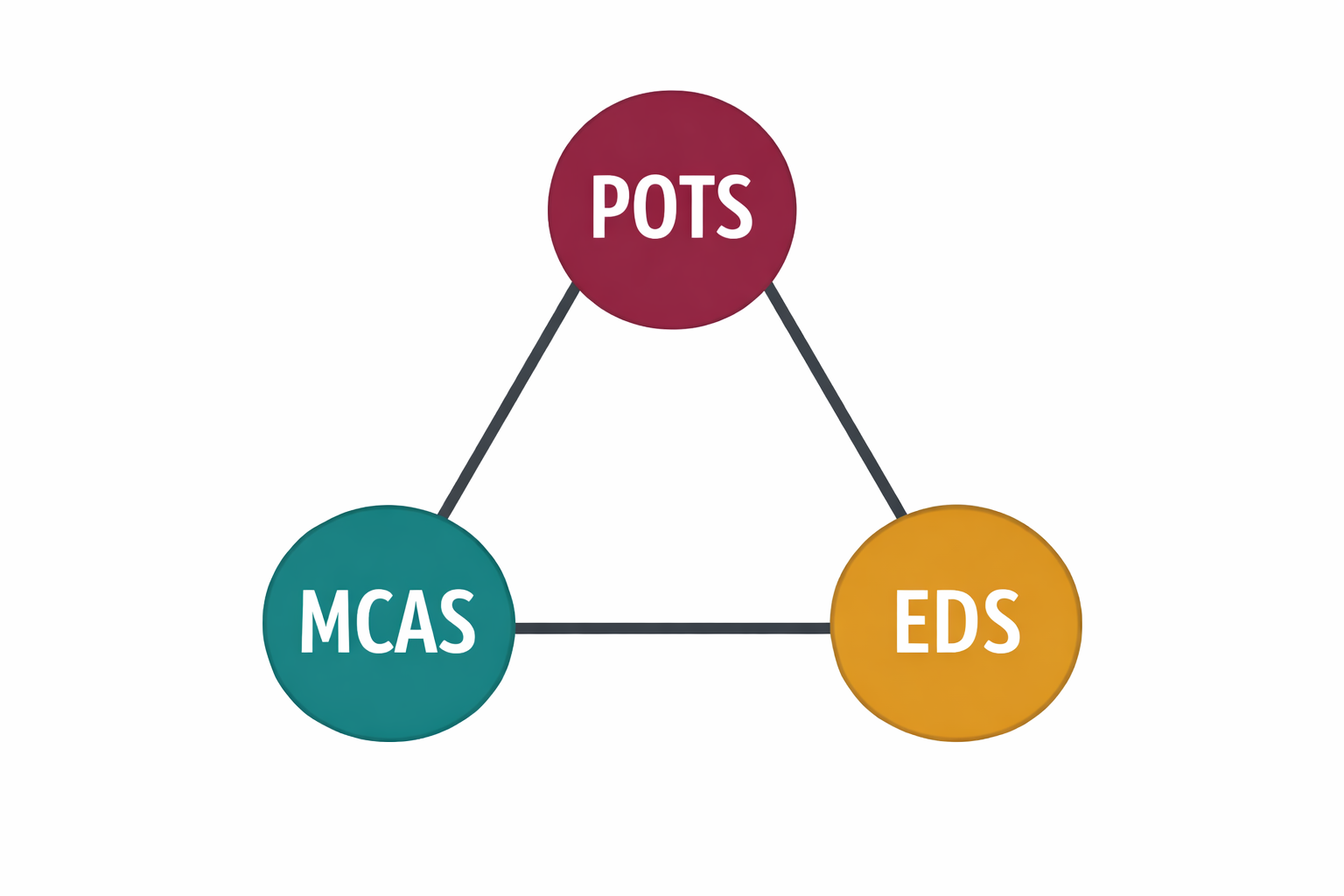
What is the dysautonomia triangle?
The term dysautonomia triangle isn’t a formal diagnosis. Instead, it’s a way to describe a pattern of overlapping conditions and symptoms that many patients experience.
At the corners of the triangle are:
POTS (a form of dysautonomia affecting heart rate and blood pressure)
MCAS (a condition involving inappropriate mast cell activation and histamine release)
EDS (a connective tissue condition that often includes joint hypermobility and tissue fragility)
You don’t need to have all three diagnoses for this pattern to be relevant. Many people identify with the symptoms long before they receive formal labels — if they ever do.
Common symptoms seen in the dysautonomia triangle
People who fall within this pattern often experience symptoms that seem unrelated at first, but are deeply connected through the nervous system and connective tissue.
Some of the most common symptoms I see include:
Dizziness or lightheadedness
TMJ pain or dysfunction
Neck instability or chronic neck tension
Migraines or headaches
GI issues (bloating, reflux, motility challenges)
Histamine reactions or sensitivities
Fatigue that doesn’t improve with rest
These symptoms can fluctuate, worsen with stress, illness, or hormonal shifts, and often leave people feeling like their body is unpredictable or unsafe.
Why this pattern is often missed
Many people living within the dysautonomia triangle have spent years seeking answers. Because symptoms cross multiple systems — cardiovascular, immune, connective tissue, neurological — patients are often passed from provider to provider without anyone looking at the whole picture.
This is especially true for women, who are too often told:
“It’s just anxiety.”
“Your labs and imaging look normal.”
“There’s nothing structurally wrong.”
Acknowledging patterns like the dysautonomia triangle doesn’t replace medical diagnosis — but it validates lived experience and opens the door to more supportive, integrative care.
A nervous-system-informed approach to support
Conditions like POTS, MCAS, and EDS require a multi-disciplinary approach that supports regulation, safety, and communication within the nervous system.
This is where craniosacral therapy (CST) and somatic bodywork can be supportive.
Rather than trying to “fix” or override the body, this approach focuses on:
Supporting nervous system regulation
Improving the body’s sense of safety and coherence
Reducing protective tension patterns, especially in the jaw, neck, and cranial system
Creating space for the body to respond with less reactivity
For people living within the dysautonomia triangle, gentle, attuned care often matters more than forceful intervention.
TMJ, the neck, and the nervous system connection
TMJ dysfunction and neck instability are extremely common in this population. The jaw, upper cervical spine, and cranial nerves play a significant role in autonomic regulation.
When these areas are under chronic strain, the nervous system may remain in a heightened, reactive state — contributing to symptoms like dizziness, headaches, and fatigue.
Craniosacral therapy offers a way to work with these sensitive systems without adding stress, making it especially appropriate for people who don’t tolerate aggressive treatments well.
You can learn more about this approach here:
👉 Craniosacral Therapy at TMJ Chiro
You’re not broken — your body is communicating
Living with POTS, MCAS, EDS, or any combination of the three can be exhausting. The dysautonomia triangle helps explain why symptoms may feel widespread and why simple answers have been hard to find.
Your body isn’t failing you.
It’s adapting — and asking for support.
If you’re looking for a provider who listens, moves slowly, and works with your nervous system, You’re in the right place.
Craniosacral Therapy in Portland, Oregon
Becky Higginson, DC offer craniosacral therapy in Portland, OR, serving clients in SE Portland, Sellwood, Lake Oswego, and the surrounding metro area. Whether you’re seeking pain relief, nervous system support, or a gentler approach to healing, craniosacral therapy can be a powerful part of your care.
Getting Started with Craniosacral Therapy in Portland
Working with a Portland craniosacral therapist who prioritizes individualized care can make all the difference.
Ready to explore craniosacral therapy in Portland?
Schedule a session or book a free consultation to see if this gentle, nervous system–focused approach is right for you.
🪷 Learn more or book a session today.
Your body knows how to heal. Sometimes, it just needs the right guidance.
Want to Learn More?
Sign up for Empowered: My once a week/ one minute email that teaches you how your body works.